


Passing the Irish driving test on the first attempt requires a thorough understanding of the Rules of the Road and the ability to drive competently and safely.
The test is designed to assess your knowledge and driving skills in accordance with the rules and with regard for other road users. To succeed, it’s essential to be well-prepared and familiar with the test format.
Taking the driving test Dublin can be a daunting experience, but with proper preparation, you can increase your chances of passing on the first attempt.
Key Takeaways
- Understand the Rules of the Road and driving skills required
- Familiarize yourself with the test format and content
- Practice driving competently and safely
- Prepare for the test by reviewing the driving manual
- Stay calm and focused during the test
Understanding the Irish Driving Test Structure
Understanding the format and requirements of the Irish driving test is the first step towards passing it successfully. The test is designed to assess a candidate’s ability to drive safely and competently.
Test Duration and Components
The Irish driving test typically lasts between 50 to 100 minutes, depending on the vehicle category. It combines both theoretical questions and practical driving assessments to evaluate a candidate’s knowledge and driving skills. The practical driving test includes various manoeuvres on the Irish driving test such as turning at intersections, navigating roundabouts, and executing specific driving tasks.
Scoring System and Pass Requirements
The scoring system assesses a candidate’s driving skills, adherence to traffic rules, and ability to perform driving tasks safely. To pass, candidates must demonstrate competent driving skills and avoid critical errors. Understanding the test duration and what is assessed during this time can help candidates prepare more effectively.
Essential Documentation and Pre-Test Requirements
Understanding the essential documentation and pre-test requirements is vital for passing the Irish driving test. Candidates must ensure they have all necessary documents and that their vehicle meets the required standards.
Required Paperwork and Identification
To take the Irish driving test, candidates must bring specific documents, including valid identification and proof of residency. The test center will not allow candidates to take the test without these documents. Ensuring all paperwork is in order is crucial.
Vehicle Requirements and Inspection
The vehicle used for the test must be in a roadworthy condition, insured, and meet all other requirements. This includes having a valid tax disc and being free from any defects that could affect safety. An under bonnet check is part of the pre-test inspection to ensure the vehicle’s engine and other critical components are in good condition.
What to Expect on Your Irish Driving Test Day
Understanding what to expect on your Irish driving test day can significantly reduce your anxiety. The driving test in Dublin, or any other location, follows a standard procedure that examiners adhere to, ensuring fairness and consistency for all test-takers.
Arrival and Initial Procedures
On the day of your test, please arrive early and make your way directly into the test centre. Arriving early is crucial as it gives you time to complete any necessary paperwork and get settled before your test begins. Ensure you have all the required documentation ready, as this will be checked by the examiner or test centre staff.
You’ll need to provide identification and other relevant documents. It’s a good idea to double-check the requirements beforehand to avoid any last-minute issues.
Interaction with the Examiner
During your test, your interaction with the examiner will be a key part of the assessment. The examiner is there to evaluate your driving skills, so it’s essential to follow their instructions carefully. Stay calm and focused; remember, the examiner wants you to succeed.
Maintaining a respectful and courteous demeanor during the test is vital. This includes greeting the examiner appropriately and responding to their questions or instructions clearly.
Preparing Mentally for Test Success
To pass the Irish driving test, mental preparation is just as important as practicing driving skills. It’s essential to understand that feeling nervous before a driving test is normal, but being mentally prepared can significantly impact your performance.
Managing Test Anxiety
Managing test anxiety is crucial for staying focused and calm during the exam. Techniques such as deep breathing exercises, visualization, and positive self-talk can help alleviate nerves. It’s also beneficial to familiarize yourself with the test format and content to reduce uncertainty.
| Technique | Description | Benefit |
|---|---|---|
| Deep Breathing | Slow, deliberate breaths | Reduces heart rate and anxiety |
| Visualization | Imagining a successful test | Boosts confidence and calmness |
| Positive Self-Talk | Encouraging affirmations | Enhances mental preparedness |
Developing the Right Mindset
Developing the right mindset involves a combination of confidence, focus, and resilience. It’s about believing in your abilities and staying committed to your goals. Practicing under test-like conditions and receiving constructive feedback can also help build the right mindset.
By managing test anxiety and developing the right mindset, you can significantly improve your chances of success on the Irish driving test. Stay calm, focused, and confident, and you’ll be well on your way to passing your test.
The Pre-Test Vehicle Safety Check
The pre-test vehicle safety check is a crucial step in ensuring you’re ready for the Irish Driving Test. This check is designed to verify that your vehicle is in a safe and roadworthy condition.
Before the driving test begins, the examiner will conduct a safety check on your vehicle. This involves inspecting various components to ensure they are in good working order.
Under Bonnet Checks
During the safety check, the examiner may ask you to pop the hood and will inquire about essential under-the-bonnet components. These may include:
- The engine oil level and condition
- The coolant level and condition
- The brake fluid level
- The condition of the belts and hoses
It’s essential to be familiar with these components and their functions to demonstrate your knowledge and responsibility as a driver.
External and Internal Vehicle Inspection
In addition to under-bonnet checks, the examiner will inspect the external and internal condition of your vehicle. This includes checking:
- The condition of the tires, including tread depth and pressure
- The functionality of all lights, including headlights, taillights, and indicators
- The condition of the windshield and windows, including the presence of any chips or cracks
- The functionality of the windshield wipers
- The condition and functionality of the mirrors and seatbelts
Ensuring your vehicle is in good condition not only helps you pass the safety check but also contributes to your safety on the road.
By understanding and preparing for the pre-test vehicle safety check, you can reduce your stress levels on the day of your test and demonstrate your competence as a responsible driver.
Mastering Secondary Controls in the Test
To pass the Irish Driving Test, it’s essential to demonstrate proficiency in using various secondary controls. Secondary controls are features of the vehicle that are not directly related to steering or accelerating but are crucial for safe driving. These include wipers, demisters, and other dashboard functions that contribute to maintaining clear visibility and a comfortable driving environment.
Demonstrating Knowledge of Dashboard Functions
Dashboard functions encompass a range of controls that are vital for safe and efficient driving. During the test, you will be expected to demonstrate your understanding of how to operate these functions effectively. This includes adjusting the heating and cooling systems, managing the wipers and demisters, and understanding the various indicators and warning lights on the dashboard.
Operating Climate and Safety Features
Operating climate and safety features is another critical aspect of mastering secondary controls. This involves not just understanding how to turn these features on or off, but also knowing when to use them appropriately during the test. For instance, knowing how to defrost the windshield or adjust the air conditioning can be crucial in maintaining a safe driving environment. Demonstrating a smooth and confident operation of these features can positively impact your test outcome.
Perfecting Hand Signals for the Test
Hand signals play a significant role in demonstrating your awareness and control during the driving test. They are an essential aspect of safe driving practices and are closely observed by examiners during the test.
Required Hand Signal Techniques
To master hand signals, you need to understand the correct techniques. There are three primary hand signals to focus on:
- Left Turn Signal: Extend your left arm straight out of the window.
- Right Turn Signal: Extend your left arm out of the window and bend it upwards at a 90-degree angle.
- Slow Down or Stop Signal: Extend your left arm out of the window and point it downwards.
When to Use Hand Signals During the Test
It’s crucial to use hand signals in the correct situations during the test. You should signal your intentions to turn, change lanes, or slow down. For instance, when approaching a turn, use the appropriate hand signal to indicate your direction. Additionally, when slowing down or stopping, use the slow down or stop signal to alert other road users.
By practicing these hand signals, you’ll be well-prepared for the driving test and develop good driving habits.
Essential Moving Off Techniques
The ability to move off smoothly and safely is a key aspect of driving competence. To achieve this, it’s crucial to understand the components involved in moving off effectively.
Safe Observation Before Moving
Before moving off, it’s vital to conduct thorough observations around your vehicle. This includes checking your mirrors, blind spots, and the road ahead for any potential hazards or other road users.
Safe observation is not just about checking your mirrors; it’s also about being aware of your surroundings and anticipating the actions of other road users.
| Observation Technique | Description |
|---|---|
| Mirror Check | Check rearview and side mirrors for other vehicles or pedestrians. |
| Blind Spot Check | Glance over your shoulder to check blind spots for any hidden vehicles or cyclists. |
| Road Ahead Check | Observe the road ahead for traffic signals, pedestrians, and other hazards. |
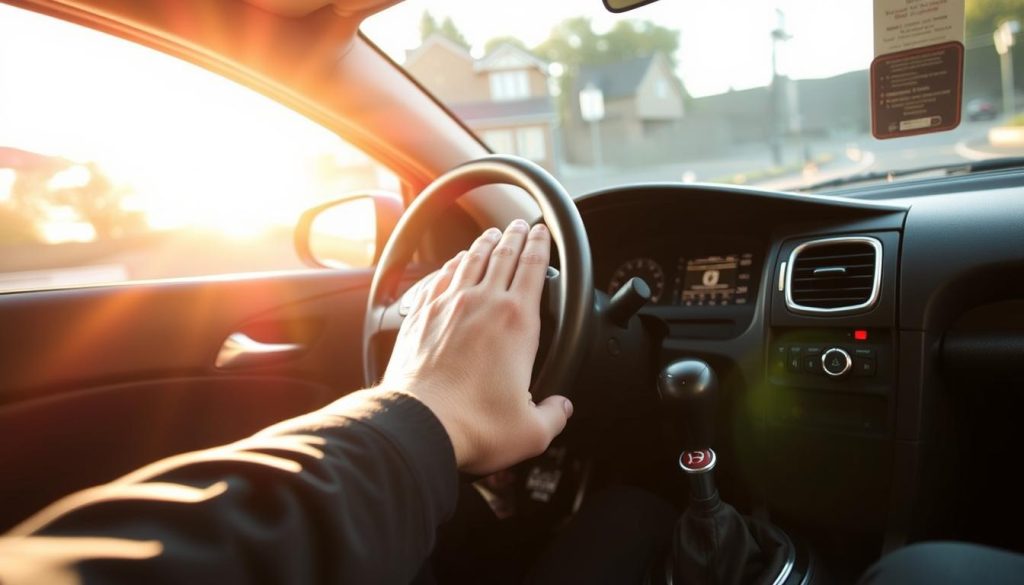
Smooth Clutch Control and Acceleration
Smooth clutch control is essential for moving off without stalling the vehicle or jerking forward. It involves gradually releasing the clutch while simultaneously pressing the accelerator.
Tips for Smooth Clutch Control: Practice the “biting point” where the clutch engages, and use gentle pressure on the accelerator to avoid jerking the vehicle.
Navigating Intersections and Roundabouts
Navigating complex intersections and roundabouts with confidence is key to passing your driving test. During the test, you’ll be required to drive approximately 8km in various road and traffic conditions, which may include navigating through busy intersections and roundabouts.
Proper Approach and Positioning
Approaching intersections and roundabouts correctly is vital. You should reduce your speed, observe traffic signs and signals, and position your vehicle according to the direction you intend to go. For roundabouts, it’s essential to signal your exit before leaving the roundabout.
Key steps for approaching intersections:
- Observe traffic lights and signs.
- Check for pedestrians and other vehicles.
- Position your vehicle correctly.
- Signal your intentions.
Right-of-Way Rules and Signaling
Understanding right-of-way rules is critical when navigating intersections and roundabouts. Generally, traffic already in the roundabout has priority, and you should yield to them. At intersections, follow traffic lights and signs, and be prepared to yield to pedestrians and other vehicles when necessary.
| Situation | Action |
|---|---|
| Approaching a roundabout | Yield to traffic already in the roundabout |
| Entering an intersection with a red light | Come to a complete stop and wait for the green light |
| Turning at an intersection | Signal your turn and yield to pedestrians |
By mastering the skills to navigate intersections and roundabouts, you’ll be well-prepared for the driving test and become a more confident driver.
Key Maneuvers on the Irish Driving Test
To pass the Irish driving test, understanding and executing key driving maneuvers is essential. The test is designed to assess a driver’s ability to safely operate a vehicle, and certain maneuvers are critical to demonstrating this competence.
Overview of Required Maneuvers
The Irish driving test includes several key maneuvers that candidates must master. These include reversing around a corner and performing a turnabout. Reversing around a corner tests a driver’s ability to safely reverse the vehicle while maintaining awareness of their surroundings. The turnabout maneuver evaluates a driver’s capacity to change direction safely and efficiently.
Examiner Expectations for Each Maneuver
During the test, examiners are looking for precise execution of these maneuvers. For the reverse around the corner, they expect candidates to check their surroundings thoroughly, use appropriate signals, and reverse slowly and smoothly. For the turnabout, candidates should demonstrate good observation skills, signal correctly, and execute the maneuver without undue hesitation.
Practicing Maneuvers Effectively
To practice these maneuvers effectively, candidates should start in a safe, empty area to get a feel for the vehicle’s handling. As they become more confident, they can move on to more complex environments that mimic the test conditions. Regular practice with a qualified instructor can help identify and correct any mistakes, ensuring that the candidate is well-prepared for the test.
By focusing on these key maneuvers and practicing them thoroughly, candidates can significantly improve their chances of passing the Irish driving test on their first attempt.
Mastering the Reverse Around the Corner Maneuver
To succeed on the Irish driving test, it’s crucial to perfect the reverse around the corner maneuver. This complex driving task requires a combination of observational skills, spatial awareness, and precise vehicle control. The maneuver is designed to test a driver’s ability to safely reverse their vehicle around a corner without causing obstruction or danger to other road users.
Step-by-Step Execution Guide
To execute the reverse around the corner maneuver effectively, follow these steps:
- Check your surroundings, including blind spots, for any pedestrians, vehicles, or obstacles.
- Signal your intention to reverse around the corner.
- Reverse slowly, keeping an eye on the rear of the vehicle and the surrounding area.
- Use reference points on the vehicle to gauge your distance from obstacles.
- Straighten up as you complete the maneuver, checking your mirrors and blind spots.
It’s essential to maintain a slow and controlled pace throughout the maneuver. Practice is key to mastering the reverse around the corner, as it helps in developing the necessary skills and confidence.
Common Mistakes and How to Avoid Them
Several common mistakes can lead to failure when performing the reverse around the corner maneuver. These include:
| Mistake | How to Avoid |
|---|---|
| Not checking blind spots | Regularly check mirrors and blind spots throughout the maneuver. |
| Reversing too quickly | Maintain a slow, controlled pace. |
| Failing to signal | Always signal your intention to reverse around the corner. |
By being aware of these common mistakes and taking steps to avoid them, you can significantly improve your chances of success on the Irish driving test. Stay focused and practice regularly to master the reverse around the corner maneuver.
Perfecting the Turnabout Maneuver
Mastering the turnabout maneuver is a key aspect of acing the Irish driving test. This maneuver requires a combination of proper technique, observation, and practice. During the test, you’ll be expected to perform a turnabout safely and efficiently, demonstrating your ability to control the vehicle in a confined space.

Proper Technique and Observation
To execute the turnabout maneuver correctly, you must first check your surroundings, observing any traffic, pedestrians, or obstacles. Proper observation is crucial to avoid accidents and ensure a smooth maneuver. Once you’ve checked your surroundings, signal your intention to turn about, and then proceed to make the necessary checks and adjustments to your vehicle’s position.
It’s essential to use your mirrors and check blind spots to be aware of your surroundings throughout the maneuver. Smooth and controlled movements are vital; avoid jerky turns or sudden stops, as these can be hazardous and may result in failing the test.
Practicing for Consistency
Consistent practice is key to mastering the turnabout maneuver. Find a safe and suitable location to practice, such as an empty parking lot, and repeat the maneuver several times. Focus on developing a consistent technique, paying attention to your observation, signaling, and control of the vehicle.
As you practice, you’ll become more comfortable with the maneuver, and your confidence will grow. This will help you to perform the turnabout maneuver smoothly and efficiently during the actual driving test.
Parking Techniques for Test Success
Parking maneuvers are a critical component of the Irish driving test, requiring practice and precision. To succeed, it’s essential to master different parking techniques, including parallel and reverse parking.
Parallel Parking Method
Parallel parking is a challenging yet crucial skill to demonstrate during the Irish driving test. To execute this maneuver correctly, align your vehicle with the car in front of the parking space and check your mirrors and blind spots for any oncoming traffic or pedestrians.
Next, reverse slowly into the space while continuously checking your position relative to the cars around you. It’s vital to maintain a slow speed and be prepared to stop if necessary.
- Check the space is large enough for your vehicle.
- Signal your intention to park.
- Align your vehicle and reverse slowly.
Reverse Parking Procedure
The reverse parking procedure requires precision and control. Begin by identifying a suitable parking bay, then align your vehicle with the bay and check your surroundings for any obstacles or pedestrians.
Reverse slowly into the bay, using your mirrors and looking over your shoulder to gauge your distance from the cars on either side. Straighten out as you back into the bay, ensuring you’re centered and within the lines.
- Identify a suitable parking bay.
- Align your vehicle and check your surroundings.
- Reverse slowly into the bay.
Practice these parking techniques to improve your accuracy and confidence, enhancing your chances of success on the Irish driving test.
Driving Test Dublin: Location-Specific Tips
When taking the driving test in Dublin, it’s crucial to be familiar with the local test routes. Knowing what to expect can significantly reduce your anxiety and improve your chances of passing.
Common Test Routes in Dublin
Dublin’s driving test routes often include a mix of urban and suburban roads. Familiarize yourself with routes that include busy streets like O’Connell Street and George’s Street, as well as residential areas. Practicing on these routes will help you become comfortable with the roads and potential challenges.
Navigating Dublin’s Unique Traffic Patterns
Dublin’s traffic patterns can be complex, with many one-way streets and busy intersections. Understanding how to navigate these effectively is key to a successful test. Pay attention to traffic signs and signals, and be prepared to make decisions quickly. Practicing in real traffic conditions will help you develop the necessary skills.
To navigate Dublin’s unique traffic patterns, it’s essential to stay alert and aware of your surroundings. Keep an eye on pedestrians, cyclists, and other vehicles, and be prepared to adapt to changing conditions.
Avoiding Critical Errors on Your Test
To pass your Irish driving test, it’s crucial to be aware of the critical errors that can lead to an automatic fail. Being informed about these mistakes can significantly improve your chances of success.
Automatic Fail Conditions
Certain actions during the test are considered so dangerous that they result in an immediate fail. These automatic fail conditions include:
- Failure to check blind spots before changing lanes or merging with traffic.
- Not coming to a complete stop at a stop sign or red light.
- Exceeding the speed limit or driving too slowly and causing a hazard.
- Dangerous or reckless driving, such as tailgating or weaving in and out of lanes.
Understanding these critical errors can help you avoid them during your test.
Recovering from Minor Mistakes
While critical errors can lead to an automatic fail, minor mistakes can often be recovered from. If you make a minor error, such as failing to check your mirrors or not signaling properly, it’s essential to:
- Stay calm and focused.
- Correct your mistake as soon as possible.
- Continue driving safely and defensively.
By being aware of automatic fail conditions and knowing how to recover from minor mistakes, you can significantly improve your chances of passing the Irish driving test.
Conclusion: Your Roadmap to First-Time Success
With the right preparation and guidance, you can ace your Irish driving test with confidence. By understanding the test structure, essential documentation, and pre-test requirements, you’ll be well on your way to first-time success.
Mastering secondary controls, perfecting hand signals, and practicing key maneuvers such as the reverse around the corner and turnabout will help you demonstrate your driving skills to the examiner. Additionally, being aware of common test routes, especially in Dublin, and navigating unique traffic patterns will boost your confidence.
Avoiding critical errors and understanding automatic fail conditions will also contribute to a successful test. By following the guidelines outlined in this article, you’ll be well-prepared for the Irish driving test and can drive away with your license on the first attempt, achieving first-time success.
Stay focused, practice consistently, and you’ll be driving with confidence in no time, having passed your Irish driving test.